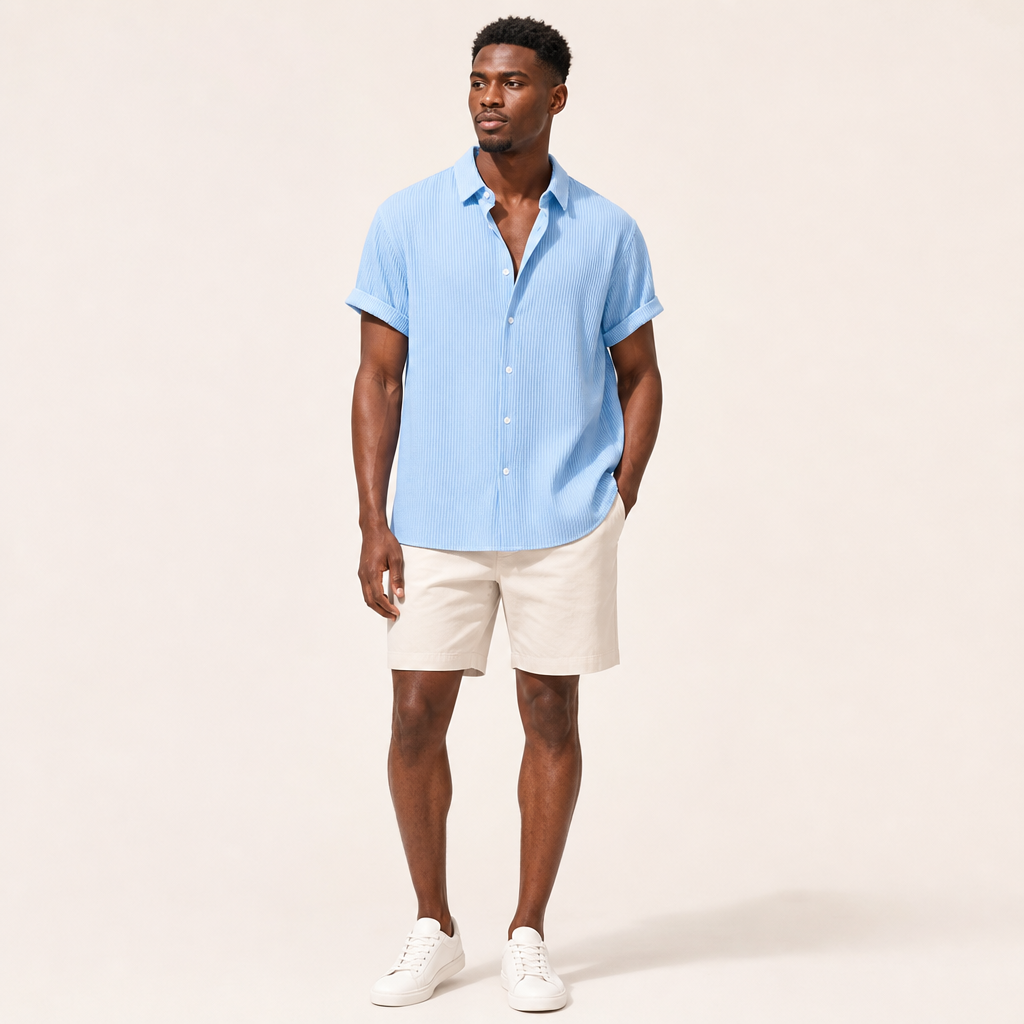
Relevant products from Franks Clothing


Women's Loose V-Neck Button-Front Three-Quarter Sleeve Cardigan
Choosing t-shirts for a minimal look works best when every choice has a reason. Use the garment as either the outfit anchor, a supporting layer or a quiet basic, then build the rest around that role.
choosing t-shirts for a minimal look: read the product page like a buyer, not a browser
Use the live product page as the final source of truth. Check the current images, available options, displayed price, measurements or fit notes, and any product-specific information before checkout. Those details can change, so do not rely on an older article or a saved screenshot.
For t-shirts, pay particular attention to images that show overall shape and length. These often tell you more about styling potential than a close-up detail shot.
Build layers with different jobs
Layering works best when each layer has a distinct length or function. Avoid stacking several bulky pieces at the same point of the body. When using t-shirts in a layered outfit, leave enough room for the garment underneath to sit naturally without pulling or bunching.
For changeable weather, build from the lightest useful base and add the layer that is easiest to remove. That keeps the outfit adaptable without depending on one very heavy piece.
Check the live measurements before choosing a size
Fit is easier to judge when you compare measurements rather than relying on a size label alone. When shopping for t-shirts, use a similar garment you already like as the reference point, then compare the measurements and fit notes shown on the live product page.
Franks’ size guide recommends measuring a comparable garment flat and treating product-specific information as the priority. If you want a relaxed or oversized result, allow for that intentionally instead of automatically sizing up.
A quick mirror check
Look at the full outfit from front, side and seated position. Small proportion issues are easier to spot when you stop focusing on the garment alone.
Let silhouette do more of the styling work
Proportion determines whether an outfit built around t-shirts looks deliberate. If your chosen piece is wide or long, give the rest of the outfit a clearer line through a shorter layer, a cleaner waistband or more streamlined footwear. If it is close-fitting, you can add volume elsewhere without losing shape.
Look at the outfit from shoulder to shoe rather than judging one garment in isolation. The strongest combinations usually have one main source of volume and one clear visual anchor.
Use one outfit anchor
Choose the piece that should attract attention, then let the other garments support it rather than compete with it.
Let footwear set the final proportion
Footwear changes the visual weight of the whole outfit. Chunkier shoes can support wider or longer silhouettes, while lower-profile trainers or cleaner shoes can stop a fuller garment from feeling too heavy.
Match the shoe to the intended setting as well as the shape. For walking-heavy days, travel or festivals, practical comfort should be part of the styling decision rather than an afterthought.
Before you commit to the piece
- Does the intended fit match the outfit you want?
- Can you name at least three realistic combinations?
- Have you checked the current product page rather than relying on old information?
- Will the piece work with the shoes and outer layer you already use?
- Does it solve a genuine wardrobe gap?
Frequently asked questions
How do I check layering room?
Measure a comparable garment you already layer comfortably and compare that with the live product measurements or fit notes.
What measurement matters most for t-shirts?
Use the measurements most relevant to the garment type and compare them with a similar piece that already fits the way you prefer.
Should I size up for an oversized look?
Not automatically. Franks’ size guide advises using product-specific measurements and fit notes rather than sizing up by default.