Relevant products from Franks Clothing


Women's Striped Cropped Blazer and Straight-Leg Trousers Set
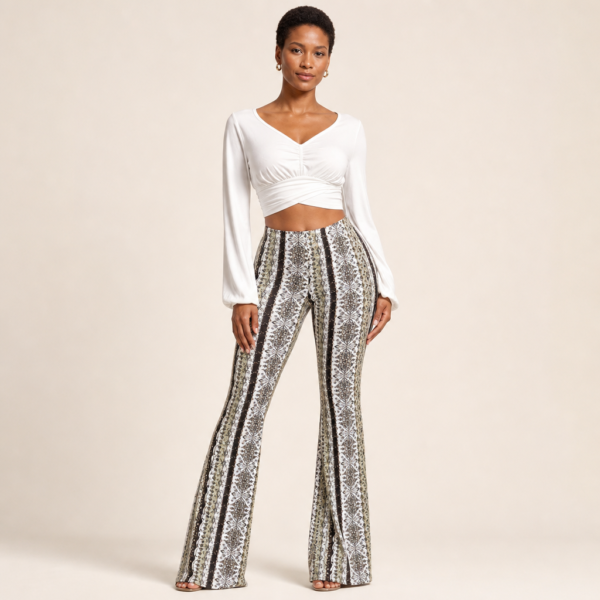
Women’s Printed Low-Rise Flared Trousers with Vertical Pattern

Women's Wide-Leg Cargo Trousers with Contrast Piping and Drawstring Waist
The quickest way to shorten a garment’s useful life is to treat every piece the same. This guide to how to keep bottoms looking better for longer uses a safer rule: follow the item-specific instructions, then store and handle it in a way that protects its shape.
In practical terms, how to keep bottoms looking better for longer is about choosing a piece that fits your routine as well as your preferred look. Bottoms set the proportion of an outfit from the waist down and determine how tops, layers and footwear balance, so start with the job it needs to do and work outward from there.
How to keep bottoms looking better for longer starts with the care label
The label and any product-specific instructions are the authority for washing, drying, ironing and specialist cleaning. Generic advice should never override them because construction, trims and finishes can require different treatment.
Do a quick care check before cleaning bottoms
- Empty pockets and remove loose items.
- Close or secure fastenings when the label or construction makes that sensible.
- Check for stains that may need targeted treatment.
- Separate items that could transfer colour or snag delicate details.
Care also happens while you wear it
Repeated friction, overloaded pockets, rough bag straps and sharp surfaces can all stress clothing. With bottoms, notice the areas that receive the most contact and rotate how you carry or layer when practical.
Small repairs are easier to manage early. A loose thread, weakened seam or damaged fastening is worth addressing before continued wear makes the problem larger.
Create a simple maintenance routine for bottoms
- Check for marks or damage before putting the item away.
- Air or clean it according to the care instructions.
- Return it to storage in the shape that best supports the garment.
- Before the next wear, inspect high-stress areas and fastenings.
A short routine is more sustainable than a complicated one you will not follow. The goal is to protect fit, colour and function without over-treating the garment.
Reduce unnecessary washing where appropriate
Not every wear automatically needs a full wash. Depending on the garment, airing and prompt spot treatment can reduce unnecessary cleaning. The decision should still respect hygiene, visible soil and the item’s care instructions.
Treat marks early, but gently
Blot or use the recommended method rather than scrubbing aggressively. Test any cleaning product in an inconspicuous area when appropriate and avoid mixing products without knowing they are safe for the item.
Protect the shape of bottoms during drying and storage
Check the care label first, empty pockets, fasten hardware where appropriate and avoid unnecessary washing when airing or spot-cleaning is sufficient for the garment. Pay attention to whether the garment is better folded, hung or laid flat according to its construction and care guidance.
Do not leave a damp or twisted garment sitting in a pile. Reshaping promptly can help prevent creases and distortion that are harder to correct later.
Use the next pair of bottoms as a wardrobe test
The strongest option is not necessarily the most dramatic one. It is the piece that fits the intended silhouette, connects to clothes you already own and can be cared for realistically. Use the live product information to confirm the details at the point of purchase.
Frequently asked questions
How often should I wash bottoms?
There is no universal schedule. Follow the care label and wash when hygiene, soil or odour makes it necessary. Airing or spot treatment may be appropriate between washes for some items.
Can I use the same wash settings for all bottoms?
No. Materials, trims, prints and construction can require different care. The garment label and product-specific instructions should always override generic advice.
What is the simplest way to help bottoms keep their shape?
Avoid leaving garments twisted or damp, reshape them promptly when appropriate and store them in a way that supports the construction without stretching or crushing it.